
MEKAIEL: Grace, Grit & the Future of Caribbean Gospel
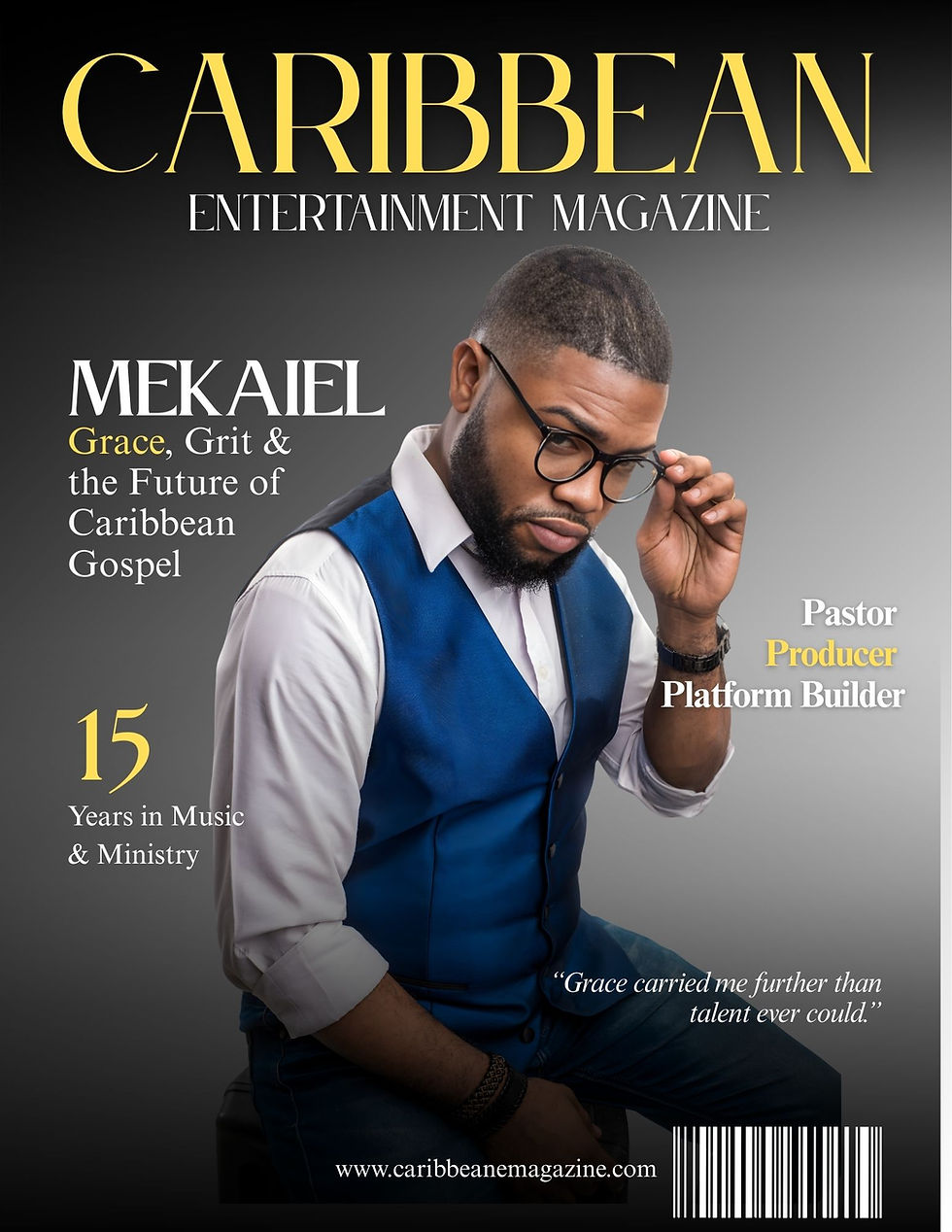
In Trinidad & Tobago, faith and rhythm often move together — in churches, on concert stages, and in everyday life. For MEKAIEL, that connection is not just cultural; it is deeply personal. Born Anthony Mekaiel I. Gonzales, he grew up in a household where rehearsals were as normal as dinner, harmonies were practiced with intention, and ministry was more than a weekend commitment. Music was never separate from faith — it was woven into the fabric of his upbringing.
Now marking 15 years in music and ministry, MEKAIEL has evolved into one of the Caribbean’s most compelling contemporary gospel voices. His debut album GRACE — a four-year journey shaped by pandemic delays, independent funding, and persistence — went on to win Album of the Year at the GMATT Awards in 2024. Yet behind the accolades is a story of discipline, loss, resilience, and legacy. The passing of his father, evangelist Tony Gonzales, in 2023, and his mother earlier this year, adds a deeper layer to both his music and his leadership — grounding his artistry in memory, purpose, and continuation.
Blending contemporary gospel, CCM, neo-soul, and subtle hip-hop inflections with unmistakable Caribbean nuance, MEKAIEL’s sound reflects both global influence and regional identity. But beyond the stage, he serves as Lead Pastor and co-founder of Advent Worship Centre, and founder of H.I.G.H. Entertainment — building platforms not only for himself, but for others navigating faith and creativity in a modern cultural landscape.
In this candid and reflective conversation with Caribbean eMagazine, MEKAIEL speaks openly about legacy, identity, global reach, leadership, collaboration, and the responsibility of shaping Caribbean gospel’s next chapter. What emerges is not just the story of an artist — but of a builder, a son, a pastor, and a voice determined to leave something that lasts.
You began writing at just 12 years old and launched your professional career at 16. What was happening in your life at that time that pushed you toward music so early?
A: I still laugh at this question a bit, because I don’t feel like there was one clear reason. Growing up in a singing family deeply involved in music ministry, music was simply part of life. My dad had my sisters and me practicing songs, working on enunciation, harmonies, and breath control, then performing at concerts and crusades with him.
By the time I wrote my first song at 12, it wasn’t great, but it was a start. I didn’t know if music would be my path, since I also loved drawing, books, film, and the idea of writing screenplays or novels. But at 16, that pull toward music came back strongly, and I chose to commit to it. Once I make that kind of decision, I stay with it.
Your music blends contemporary gospel, CCM, neo-soul, and subtle hip-hop influences. How did growing up in Trinidad & Tobago shape your sound and artistic identity?
A: My musical foundation came from a home that didn’t separate faith from enjoyment. We listened to a wide range of music, and gospel was never treated as something reserved for certain moments. It was part of everyday life.
As I grew, I connected with contemporary gospel, CCM, R&B, neo-soul, and hip-hop, and it all felt like a natural progression. At the same time, growing up in Trinidad & Tobago, you’re surrounded by Calypso and Soca. That rhythm, that energy, it shapes how you hear music, how you approach melody. So even in contemporary gospel, there’s a Caribbean nuance that naturally comes through.
Being the son of singing evangelist Tony Gonzales, faith and music were clearly part of your foundation. How did that upbringing influence the artist and leader you are today?
A: My father, Tony Gonzales, who passed in April 2023, has definitely had a lasting influence on me. Before I knew artists like Kirk Franklin, Deitrick Haddon, or Tye Tribbett, he was my reference point for what gospel music and ministry looked like.
I remember telling him around age 10 that I wanted to take what he had done and go even further. At the time, I didn’t fully understand what that meant, but now I do. I watched him give his all to both his family and ministry. He always told me not to chase temporary success, but to build something that lasts, and that has stayed with me.
I also stepped into a recording studio for the first time at 8 while he was recording his second covers album, and experiences like that also shaped how I approach music today.
Your debut album GRACE earned Album of the Year at the GMATT Awards. What does “grace” personally mean to you, and how did that theme shape the album’s creative direction?
A: Grace, to me, is God’s unmerited favor, especially in the middle of my own imperfections. That understanding deepened during the creation of the album.
We started the project in late 2019, and by March 2020, Trinidad & Tobago went into lockdown due to the Covid-19 pandemic. My producer, Lesroy Byers, was also out of the country, so everything shifted to online sessions and limited studio access. What was meant to take a year became a four-year journey, including the challenge of funding the project independently.
When the album was finally released, nominated, and then won Album of the Year at the 2024’s GMATT Awards, it was overwhelming in the best way. It showed me how grace, hard work, and persistence all come together. The theme of grace was already present throughout the songs, so the title felt natural.
“Say That Name” and “Surrender” have resonated deeply with listeners. What stories or personal experiences inspired those songs?
A: “Say That Name” was actually one of the first songs I ever wrote at 16. I held onto it, and when working on the album, I revisited it and knew it deserved to be included. It was refined and released at the right time in my journey.
“Surrender” came differently. My producer had already written it, and it matched exactly where I was in life, learning to release control and trust God fully. Bringing Bj’orn Pierre onto the track happened organically. He heard the song while I was recording and asked for time to contribute. When we got his vocals back, we immediately knew it was special.
You’ve been recognized internationally, including coverage on Rapzilla and nominations at the Prayze Factor Awards in Atlanta. How important is global reach for Caribbean gospel artists?
A: For years the United States has long been seen as a central hub for entertainment, which has sometimes led to the Caribbean being viewed mainly as consumers rather than contributors. That narrative is changing, but there is still work to be done.
For Caribbean gospel artists, global reach matters. It allows us to share our sound and message of faith beyond the region. Our music carries influences like soca and reggae, and that identity is important. With digital platforms and Caribbean communities worldwide, we have the opportunity to expand our impact and show that the Caribbean has a meaningful voice in gospel music.
You serve as Lead Pastor at Advent Worship Centre while actively recording and performing. How do you balance ministry and music without compromising either calling?
A: Honestly, I see both pastoring and music as part of one calling, but balance is still necessary. Each responsibility, teaching, leading, creating, requires intention and structure.
Delegation plays a big role. I rely on the people around me, even if the team is small. That support allows me to serve effectively without neglecting either side of the calling.
Your work often speaks to identity, purpose, and belief in a modern cultural climate. What conversations do you think the church needs to be having right now?
A: Right now, I’d say that many people are forming their identity through social media, politics, and trends. The church needs to refocus the conversation on identity in Christ and how that shapes daily life.
We also need deeper conversations about purpose, beyond visibility or recognition. It’s possible to stand firm in your beliefs without becoming harsh or combative.
At the same time, young adults are searching for direction and stability. The church should be addressing identity, spiritual growth, and mental and emotional health, while showing how faith can be lived out with honesty and compassion.
As founder of H.I.G.H. (Here In God’s Hands) Entertainment, you’re not just an artist but a builder of platforms. What inspired you to step into artist management and event production?
A: Early on, I prayed for opportunities to learn, both what to do and what to avoid. As I entered the music space, I noticed a lack of artists creating their own platforms, especially in event production.
That pushed me to step into that space, not just for myself but to support others as well. The same applied to artist management. I encountered situations where artists weren’t being guided properly, and after losing my first manager, Billyduane Bennett, I stepped into self-management.
From there, it naturally grew into supporting other artists, building relationships, and developing a stronger understanding of the business side of music.
Caribbean gospel music is evolving. Where do you see the genre heading, and how can artists maintain authenticity while staying culturally relevant?
A: Caribbean gospel is moving toward a more blended sound, combining traditional roots with Reggae, Dancehall, Soca, and Afrobeat influences.
As younger audiences shape culture, collaboration and global connection will increase. To stay authentic, artists need to keep the message of faith and hope central, while using sounds and stories that reflect real Caribbean life. Authenticity comes from honesty and respect for cultural roots.
You’ve shared stages and collaborations with respected voices like Russell Léonce, Naomi Raine, and Positive. What has collaboration taught you about growth and humility in this industry?
A: Collaborating with other artists has been a meaningful part of my growth. It allows for that exchange of ideas, the blending of styles, and learning new approaches to music.
It also expands reach, since each artist brings their own audience. Beyond that, it builds relationships and creates moments that push creativity forward.
Looking ahead, what legacy do you hope MEKAIEL leaves, not just in music, but in faith, leadership, and Caribbean culture?
A: This year marks 15 years of music and ministry for me. My goal is to continue reaching people wherever they are in life, growing in my craft, and using my gift to make an impact.
For Advent Worship Centre, the vision is to expand outreach, develop leaders, deepen spiritual growth, and strengthen the worship experience. At the core is discipleship and community.
On a personal level, I hope my life of faith has the same impact my parents had on me, especially my mother, Deborah Roberts-Gonzales, who passed earlier this year. I want that legacy to continue through my children and beyond.
Conclusion
As Caribbean gospel steps into a new era, MEKAIEL’s voice stands at the intersection of culture, conviction, and calling. With grace as his foundation and grit as his fuel, he isn’t just creating music — he’s building legacy.
Photo: Curtis H. Photography


Comments