
Trinidad & Tobago Pastelles Recipe: A Traditional Caribbean Christmas Favorite
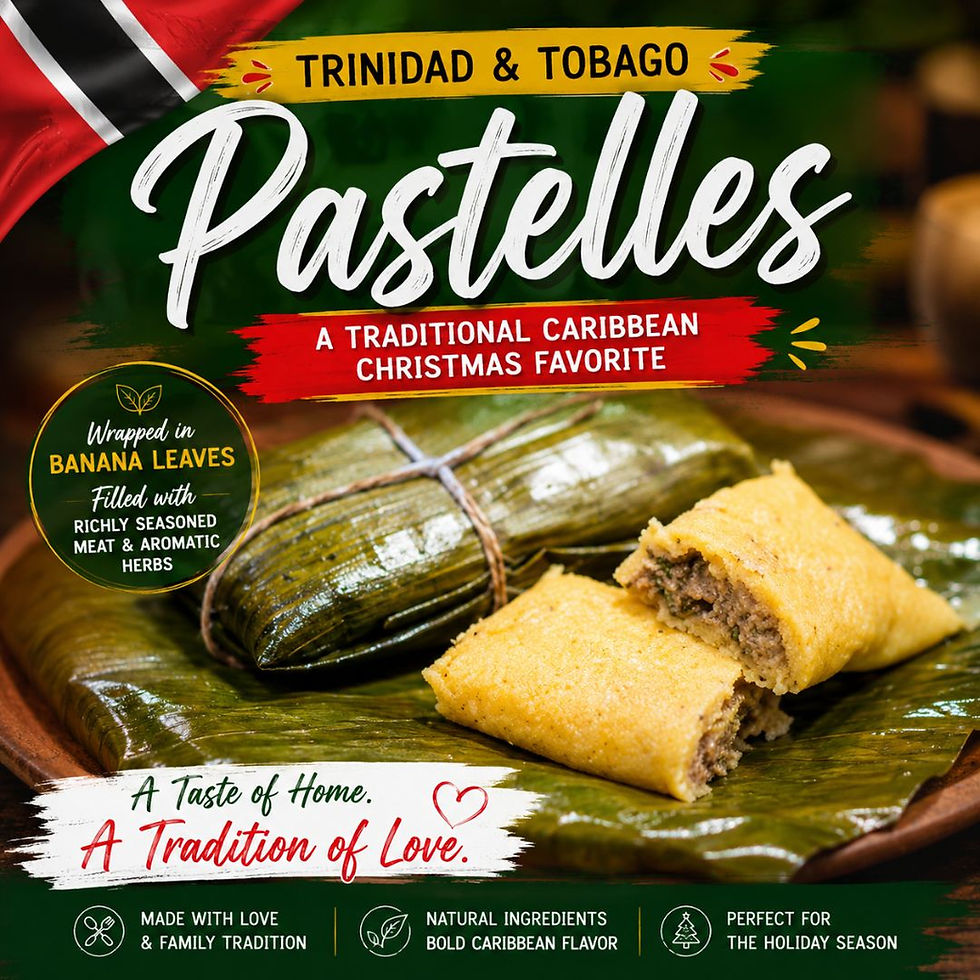
In Trinidad and Tobago, Christmas simply wouldn’t feel the same without pastelles. Wrapped in banana leaves and filled with richly seasoned meat, olives, capers, raisins and aromatic herbs, these savory cornmeal parcels are one of the country’s most treasured holiday foods.
Pastelles are traditionally prepared during the Christmas season, often as a family activity that brings several generations into the kitchen. One person prepares the filling, another presses the cornmeal dough, while someone else cuts and softens the banana leaves. Before long, dozens of neatly wrapped pastelles are ready for Christmas morning, holiday gatherings or sharing with friends and neighbors.
Although recipes vary from household to household, the heart of a Trinidadian pastelle remains the same: soft cornmeal dough surrounding a deeply seasoned savory filling, all wrapped and cooked in banana leaves.
Here is a traditional-style recipe you can make at home.
What Are Trinidadian Pastelles?
Pastelles are small cornmeal parcels filled with seasoned meat and wrapped in banana leaves before being steamed or boiled.
The traditional filling is often made with beef, although chicken, pork, fish and vegetarian versions are also popular. What gives Trinidad pastelles their distinctive character is the balance of savory, salty and slightly sweet ingredients.
Olives and capers provide briny notes, while raisins add little bursts of sweetness. Fresh herbs, peppers and Trinidad-style green seasoning bring unmistakable Caribbean flavor.
While pastelles are closely associated with Christmas in Trinidad and Tobago, their history reflects the multicultural influences that have shaped the country's cuisine.
Trinidad & Tobago Pastelles Recipe
Prep Time: 1 hourCook Time: 30–40 minutesMakes: Approximately 12–15 pastelles
Ingredients
For the Meat Filling
2 lbs ground beef
1 medium onion, finely chopped
4 cloves garlic, minced
3 scallions, finely chopped
2 tablespoons chopped chadon beni (culantro)
1 tablespoon fresh thyme leaves
2 tablespoons Trinidad green seasoning
1 small pimento pepper, finely chopped
½ Scotch bonnet pepper, finely chopped, optional
2 tablespoons tomato paste
½ cup water or beef stock
½ cup chopped green olives
2 tablespoons capers
⅓ cup raisins
1 teaspoon Worcestershire sauce
½ teaspoon ground black pepper
1 teaspoon salt, or to taste
1 tablespoon vegetable oil
For the Cornmeal Dough
3 cups fine yellow cornmeal
4 tablespoons butter, softened
1 teaspoon salt
1 teaspoon brown sugar, optional
Approximately 2½–3 cups warm water or warm stock
For Wrapping
Banana leaves
Kitchen twine
Additional softened butter or oil for brushing
Step 1: Prepare the Banana Leaves
Banana leaves give pastelles their traditional appearance and contribute a subtle aroma during cooking.
Wash the leaves thoroughly and wipe them dry. Cut them into approximately 10-inch squares.
Fresh banana leaves can tear easily, so they need to be softened before wrapping. Briefly pass each piece over a low gas flame or place it in a hot pan for several seconds. The leaf will change slightly in color and become flexible.
If you're using frozen banana leaves, thaw them completely, wash and dry them before use.
Set the prepared leaves aside.
Step 2: Make the Pastelle Filling
Heat the vegetable oil in a large skillet over medium heat.
Add the onion, garlic, scallions, pimento pepper and Scotch bonnet, if using. Sauté for approximately two to three minutes until fragrant.
Add the ground beef and break it apart with a wooden spoon. Cook until browned.
Stir in the green seasoning, chadon beni, thyme, tomato paste, Worcestershire sauce, black pepper and salt.
Add the water or stock and allow everything to simmer for approximately 10–15 minutes, stirring occasionally.
Finally, stir in the chopped olives, capers and raisins.
Continue cooking until most of the liquid has evaporated. The filling should be moist but not wet, since excessive liquid can make the pastelles difficult to assemble.
Taste and adjust the seasoning.
Remove from the heat and allow the filling to cool.
Food Editor's Tip
Don't skip the olives, capers and raisins simply because the combination sounds unusual. Their salty-sweet contrast is one of the flavors that distinguishes traditional Trinidadian pastelles from an ordinary seasoned meat filling.
Step 3: Make the Cornmeal Dough
Place the cornmeal and salt in a large mixing bowl.
Add the softened butter and work it through the cornmeal with your fingers.
Gradually add warm water or stock while mixing until a soft, smooth and pliable dough forms.
The dough should be moist enough to press easily without cracking around the edges but firm enough to hold its shape.
If it feels dry, add additional warm water a tablespoon at a time.
Divide the dough into approximately 12–15 equal balls.
Step 4: Press the Pastelles
Traditionally, a pastelle press makes this process much easier, but you can make them without one.
Place a prepared banana-leaf square on your work surface and lightly brush it with butter or oil.
Place one ball of cornmeal dough in the center.
Cover it with another piece of banana leaf, parchment paper or plastic wrap and gently press or roll the dough into a thin circle approximately 6 inches across.
Remove the top covering.
Place approximately 2 tablespoons of meat filling in the center of the cornmeal circle.
Avoid overfilling. You need enough space around the edges for the dough to enclose the filling.
Step 5: Fold and Wrap
Using the banana leaf to help you, fold one side of the cornmeal dough over the filling.
Fold the opposite side over so that the dough completely encloses the meat.
Fold the remaining sides inward to create a neat rectangular parcel.
Wrap the banana leaf securely around the pastelle, folding the sides underneath.
Tie the package with kitchen twine.
Repeat until all the dough and filling have been used.
Step 6: Cook the Pastelles
Bring a large pot of water to a gentle boil.
Carefully add the wrapped pastelles and cook for approximately 20–30 minutes.
Alternatively, arrange them in a steamer and steam for approximately 30–40 minutes.
Once cooked, remove them carefully and allow them to rest for several minutes before opening.
The cornmeal should be firm but tender, with the filling hot and aromatic inside.
How to Serve Trinidad Pastelles
Pastelles are delicious served warm, especially with homemade pepper sauce on the side.
At Christmas, they often appear alongside other Trinidad and Tobago holiday favorites such as ham, homemade bread, black cake, ponche de crème and sorrel.
Some people enjoy pastelles for breakfast on Christmas morning, while others serve them as part of the main holiday spread.
And like many traditional Caribbean dishes, there's always debate about the "right" way to make them. Some families add more raisins. Some leave them out. Others increase the olives and capers or have their own carefully guarded green-seasoning mixture. That's part of the beauty of the dish.
Chicken Pastelles
You can easily substitute ground chicken for the beef. Because chicken is leaner, add a little extra oil or butter to prevent the filling from becoming dry.
Season it generously with green seasoning, garlic, chadon beni, thyme and pimento peppers before adding the traditional olives, capers and raisins.
Vegetarian Pastelles
For a meat-free version, replace the beef with a mixture of finely chopped mushrooms, lentils, chickpeas or textured vegetable protein.
Season the filling just as generously as the traditional version. The goal is still a rich, intensely flavored center that can stand up to the mild cornmeal exterior.
Can You Make Pastelles Ahead of Christmas?
Absolutely—and many Trinidadian families do.
Pastelle making can be time-consuming, so preparing a large batch ahead of the holidays makes Christmas entertaining much easier.
Once assembled and cooked, allow the pastelles to cool completely. Refrigerate those you plan to eat within a few days.
For longer storage, place the wrapped pastelles in freezer-safe bags or airtight containers and freeze.
To serve, thaw them in the refrigerator and reheat by steaming or gently warming them in hot water until heated through.
Why Pastelles Mean Christmas in Trinidad & Tobago
Pastelles aren't simply another holiday recipe. For many Trinidadians, making them is part of the Christmas ritual.
The banana leaves spread across the kitchen table, bowls of seasoned meat, piles of cornmeal dough and family members forming an assembly line are memories that stretch across generations.
Recipes are handed down, adjusted and fiercely defended. Everyone seems to know somebody whose mother, grandmother or aunt makes "the best pastelles."
And perhaps that's exactly how a treasured Caribbean Christmas tradition should be.
Whether you're continuing a family tradition or making them for the first time, homemade Trinidad & Tobago pastelles bring an unmistakable taste of the islands to the holiday table.
Trinidad and Tobago pastelles, traditional Trinidad pastelles, Caribbean Christmas recipes, Trinidad Christmas food, beef pastelles recipe, cornmeal pastelles, banana leaf pastelles, Caribbean holiday food.


Comments